
More change within council’s turbulent education department
North Northamptonshire Council has appointed its fifth education boss in five years, amid problems with special needs, mainstream placement planning and GCSE achievements
By Sarah Ward

The turbulence within North Northamptonshire Council’s (NNC) education department is continuing, as the authority has recently appointed its fifth schools’ boss in five years.
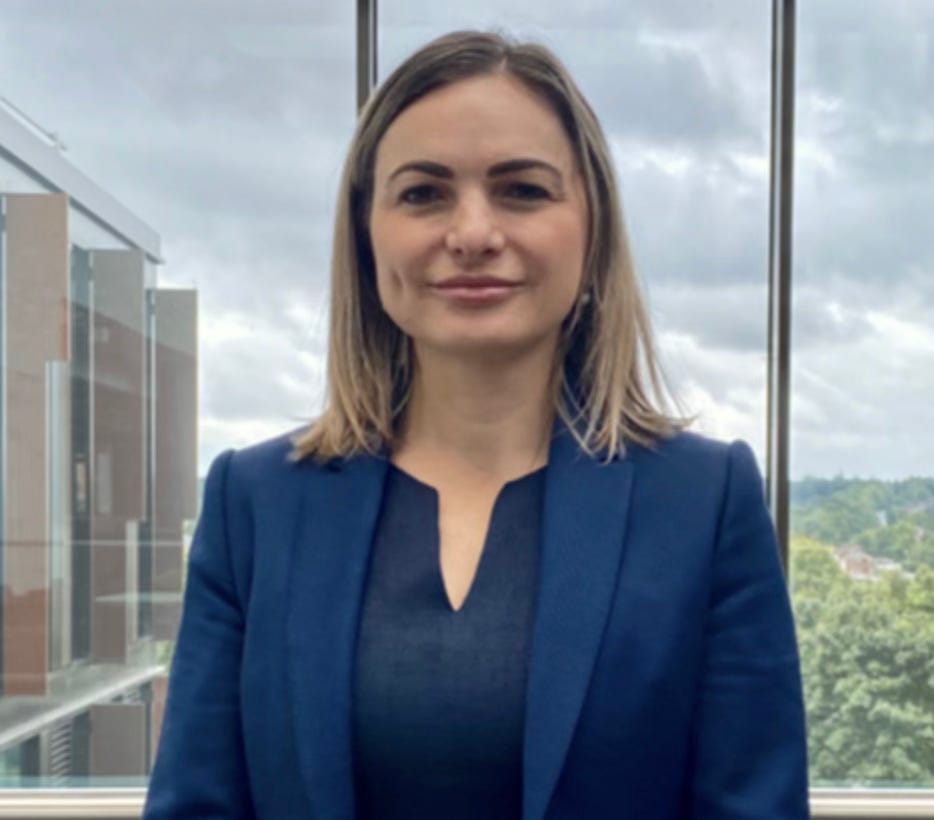
Annita Gray, who has spent most of her career at London councils, has been appointed the assistant director of education, send and inclusion at NNC.

She has replaced Amanda Butler who had been doing the job since 2025 and before that Fran Cox, Neil Goddard, and Anne Marie Dodds had all held the role. There has been a revolving door at the authority, which has caused concern among head teachers.
The assistant director of education is responsible for schooling and works under the director of children’s service and there has also been a high churn in this role, with a series of different people doing the job. Most recently Charisse Monero departed the council in July and was replaced by Cornelia Andrecut, who had been deputy at the children’s trust.
As NN Journal has reported over recent months the authority has problems in many education areas. GCSE students in the North of the county are performing less well than their Northants peers across the unitary border, as well as compared to national students. Performance levels have decreased in the five years since the unitary was in place.
In October an education officer also said the authority - which has had to fund emergency extra places - has not had a places sufficiency plan since it was set up in 2021 and in 2024 Ofsted and the Care Quality Commission found there were ‘widespread and systemic failings’ in the council’s SEN provision. It found the service was disjointed and some children were waiting too long for help.
The council and health partners were ordered to come up with an improvement plan. A report that will be discussed by the council’s health and wellbeing board next week says the plan has delivered improvements including improved waiting times for children being accessed for education, health and care plans and a halving in the wait time for children who need mental health services.
There has also been more investment by health in speech therapy services.
The authority has like all councils been told recently by the Labour government that 90 per cent of its special needs school budget deficit will be covered through the new high needs stability grant. Across the country councils are in huge deficits largely due to years of paying for expensive SEN placements at private schools and due to transport costs.
At NNC this deficit is expected to come in at around £45m by the end of this month’s financial year.
However in order to qualify for the stability grant councils must submit to the Department for Education (DfE) a Local Send Reform plan which maps out how changes will be brought in to reduce spending.
At this month’s schools forum, the new assistant director of education was questioned about whether her team would meet the deadlines.
She said:
“There is no denying there is quite a lot to do and it is important we work together on that. We have to meet those deadlines, because it is very dependent on us getting our payment.”
She said the council has a ‘robust transformation team’ and she was confident deadlines would be met. She also said the DfE had given some support with a finance advisor.
Referencing the turnover, Kathryn Murphy, head at Latimer Arts College in Kettering, said the authority had informed the secondary heads forum that a number of new permanent appointments were being made but there was not clarity on start dates.
Annita Gray said:
“Some colleagues will be here to do a handover, and the area we have had some challenges is the places and sufficiency work and our head of SEND is not starting until May.”
She said some colleagues were acting up ‘but there was no denying there is going to be quite a lot of hard work between now and June [when the SEN improvement plan must be submitted to the government].”
Troy Hobbs, who had been the interim head of SEND, has also recently departed.
In order to change the high bills in special needs the council must start to move away from paying high fees to independent schools.
As reported by the Local Democracy Reporting Service, Annita Gray said at the children’s, young persons and education scrutiny committee meeting last Thursday (March 19), there is a necessity to “change the trajectory” of DSG spending going forward and deliver good outcomes for children in a financially sustainable way through earlier intervention.
Statistics shared in the meeting show there are currently 238 children attending Independent Special Schools at a cost of around £78k each a year, compared with an average of £22k for a child in a maintained school. The council is forecast to spend nearly £18m this year on independent provision alone.
NNC says it will conduct ongoing reviews of children placed in independent settings and accelerate the rollout of planned AP and SEND units within mainstream schools to mitigate overspends.
Cllr Elizabeth Wright, executive member for children, education and families, said:
“Obviously, one part of this [SEND] reform is about keeping children in mainstream settings as much as possible. We have been going out, visiting schools and there is a nervousness around this plan because schools are already struggling.
“We will have to move together to do this to get the right outcomes for children.”
If you value NN Journal please give us your financial support with a monthly subscription
Read more on this issue
Friday brief: GCSE results in North Northants well below national average and falling each year

The number of pupils in North Northants achieving five GCSES, including English and Maths, is well below the national average and has been falling year on year.

Lots of vague talk but where are the plans and results?
High senior staff turnover is a recipe for disaster.
Five boss in five years! The numbers tell you all. Plan clarity are absent. The Trust is not performing and in my humble opinion will never perform. The management are inadequate and no change of boss will solve the problem.