
Friday brief: Start up company given council’s £13m modular homes contract
Plenty of news this Friday
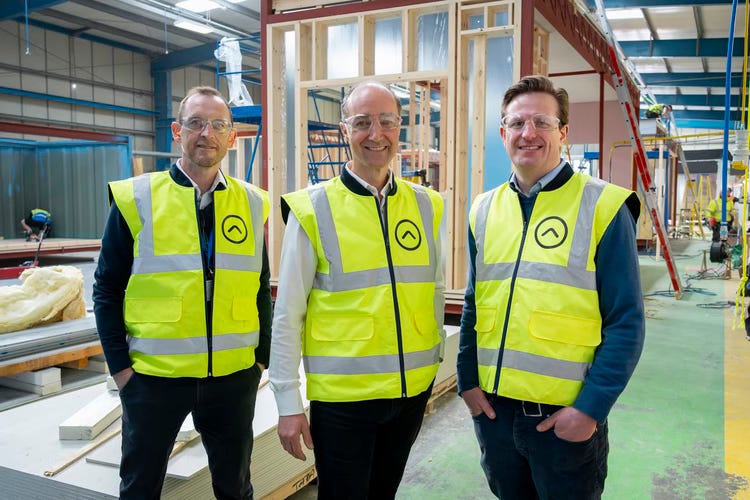
A company that has not yet filed any annual accounts, has been awarded a £13m contract to build two modular housing complexes in Northampton.
In a bid to reduce its temporary accommodation bill, West Northamptonshire Council (WNC) began to look into modular housing back in 2024.
It granted itself planning permission in June last year to build 108 homes at two sites it owns, 70 at the Claret care park off Edgar Mobbs way, near Sixfields and the rest on the former Lings School site in Billing Brook Road. The authority is currently housing around 750 families in temporary accommodation, with half of those put up in private accommodation.
Back in 2024 the council’s then Conservative administration held a behind closed doors meeting to discuss the scheme and allocated £12.7m towards the project.
That sum has now risen to £13.795m and Boost TA, a company founded in Yorkshire in July 2024, has now been awarded the contract. It is unclear how much Boost PA will earn from the project. The contract register has a sum of £664,000 assigned to the company.
The startup firm, which is led by directors Giles Donovan and Will Roberts, changed its office address to a Northampton location last year. According to Companies House it has not as yet filed any accounts.
Giles Donovan is a former property developer who was based in Los Angeles for many years and Will Roberts is the son of Peter Roberts, a serial entrepreneur and founder of the PureGym chain.
Boost PA will purchase the units from Yorkshire based Integra Buildings.


NN Journal asked the council for some details of how Boost PA won the contract and a spokesman said:
“The council’s contract is with Boost, which sub‑contracts the civil engineering works and the supply of the modular units. Boost TA was selected through an open competitive process and was the only bidder to submit a compliant proposal. The Council recognised that Boost TA was a new company and assessed the associated risks and mitigation measures. The modular unit supplier is a well‑established and reputable firm. Contract details can be found in the WNC contracts register.”
The council says half of the budget will go on site costs. The proposal has not been scrutinised by the wider council.
In a press release issued this week Boost PA said it had appointed project director Rick Butters to oversee the scheme. It said it had a number of other local authority contracts. We asked the firm further questions about these contracts and await an answer.
WNC has a recent poor track record on delivery of major schemes.
It lost millions through its housing company Northamptonshire Partnership Homes, which has failed to build a number of new build projects, due to a lack of experience.
It went £5.1m over budget on Northampton’s market square and last year got into a legal wrangle with the contractor Stepnell, agreeing to pay it an extra £1m in a legal settlement.
Costs also rose by £1.25m on the £9.4m mortuary the council decided to build on Riverside, Northampton.
By Sarah Ward
This story is an exclusive from NN Journal. Why not show your support for our public interest inquiries and become a paying subscriber? Local news is crucial to local democracy and we can only stay around with support from our readers.
News from across the county
The police watchdog has said an investigation is required following a serious domestic assault in Wellingborough last weekend.
The Northants force referred itself to the Independent Office for Police Conduct in relation to the incident which happened in the Queensway area of the town last Friday.
An IOPC spokesperson said:
“We received a death or serious injury (DSI) referral on 16 March from Northamptonshire Police relating to a domestic assault on 14 March in which a woman suffered serious injuries.
“Police had contact with the woman on 13 March. Having examined the referral and all evidence available to us at this stage, we believe an investigation is required and that it is suitable to be carried out by the force’s Professional Standards Department.
“The DSI referral also related to an incident just before 6pm on 15 March in which a man suffered stab wounds. However, as there had been no direct or indirect police contact with the victim, the IOPC has no jurisdiction to examine the matter.
“We have asked Northamptonshire Police to consider if there might be any conduct matters related to the stabbing incident and, if so, for a referral to be made to us for assessment.”
A Northamptonshire Police spokesperson said:
“I can confirm that the Force did make a referral to the Independent Office for Police Conduct (IOPC).
“This is standard procedure when someone is seriously injured and there has been prior police contact with the victim.
“However, the IOPC has referred this matter back to Force to investigate locally and it would therefore not be appropriate to comment further while this investigation is on-going.”
You will not read this news anywhere else today. Sign up to NN Journal and support our reporting
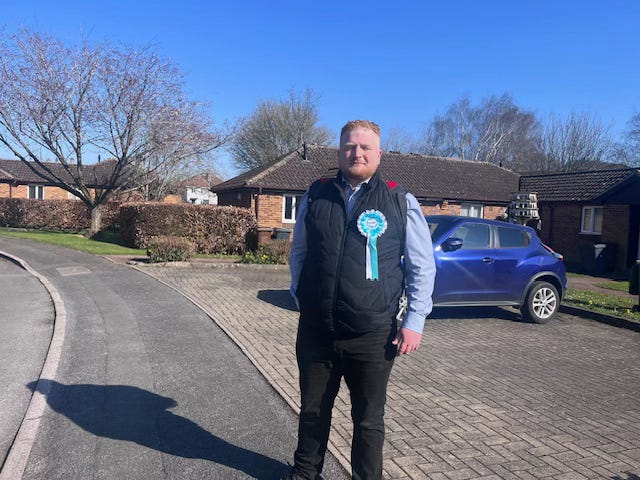
Reform UK has had a double victory in today’s Corby Town Council by-elections.
Chairwoman of North Northamptonshire Council Helen Campbell has been elected to the Kingswood Ward, with 673 votes and Patrick McMillan will now sit on the council in the Corby West ward, after 689 people voted for him. Labour candidates were second in each ward, Green party third and the Lib Dems placed fourth.
Reform UK has now won all three of the by elections held on the council since last May’s elections. Labour controls the council.
The results in Corby West were: Heather Anderson, Labour, 537; Alex Bailey, Lib Dem, 74 Lee Forster, Green, 436 Patrick McMillan, Reform UK, 689 and Neil Rielly, Independent, 99.
The results in Kingswood were: Tracey Bruce, Lib Dem, 194; Helen Campbell, Reform UK, 673; Sophie Campbell, Green, 295 and Mohammed Rahman, Labour, 388.

North Northamptonshire Council says that ‘current evidence’ suggests that a corroded pipe is responsible for water on a Corby road rather than being down to a historic landfill leaking.
As NN Journal along with BBC and ITV reported this week, a council report from January 2025 suggested that Deene Quarry, the site where Corby’s toxic waste was buried, is leaking.
There have been concerns for many years about the site near Gretton Brook Road and water testing in November by local people in conjunction with independent charity Earthwatch found hotspots of cadmium pollution in the area.
On Tuesday the authority, which is the licence holder for the landfill site, said ‘it took environmental concerns very seriously’ and now it has issued a further statement which says:
“NNC is aware of historic landfill and industrial land uses in the wider Rockingham Speedway area. Sites of this nature are common in areas with a long industrial history, and they are subject to regulation through a number of environmental and planning frameworks. The information reference relates to investigations into water entering Gretton Brook via a drainage pathway. Current evidence indicates that water entering the brook is associated with a corroded pipe acting as a pathway for surface water or groundwater, rather than confirming that a landfill site is leaking.
“Water quality testing undertaken during the investigation found that metal concentrations were below EQS and the EA assessed the incident as having a limited and localised impact on the watercourse. Historic landfill sites are managed through established regulatory regimes. Where potential risks are identified, they are considered under the relevant legislation, including contaminated land provisions and environmental regulation, with oversight from the appropriate authorities such as the EA and local authority.
“NNC continues to work with the EA and other relevant organisations where environmental issues are identified. At present there is no evidence confirming that a landfill site is leaking or that there is wider risk to public health. If credible evidence emerges indicating a risk to human health or the environment, the Council and relevant regulators would review the information and determine whether further investigation or action is required.”
West Northamptonshire Council (WNC) has halved the average time it takes to complete education, health and care plans (EHCP) for children with special educational needs over the last year.
A children, education and housing scrutiny committee meeting held on Monday (March 16), heard that the average time taken to complete an EHC assessment dropped from 54 weeks in February 2025 to 24.9 weeks last month.
An EHC plan is a legally-binding document that sets out the support for children and young people aged up to 25 who have special educational needs or disabilities. National guidance states that local authorities have 20 weeks to issue a final plan, however only around 50 per cent of plans are completed within the specified time limit nationally.
Officers told the committee meeting that 34 per cent of EHC assessments in West Northants were completed within 20 weeks – a massive increase from just 1.6 per cent issued on time a year prior.
Head of SEND at WNC, Louisa Jones, said that the department is looking to continue this trajectory and reach at least 75 per cent of EHC plans completed on time by October 2026.
An inspection of the SEND Local Area Partnership in March 2024 concluded that there were ‘widespread and systemic failings’ in West Northants.
It recommended five priority action areas of improving partnership and leadership, addressing the length of time families have to wait for EHC assessments, ensuring the quality of the plans once issued, and better addressing speech, language and communication needs.
The council previously said that it had created an extra 17 caseworker posts and recruited two EHC service managers as part of its action plan to clear the backlog of assessments, as well as put a workforce development plan in place to ensure the quality of EHCPs.
Kim Stevenson, from the West Northants Voices in Partnership parent carer forum, told members that they were starting to see “green shoots” in the council’s SEND performance.
She said:
“We’re getting parents that are not wanting any amendments on their written EHCPs – I mean, I don’t think I have seen that in 30 years.
“Turning the county is like turning the Titanic. It’s very early days, but we are going in the right direction.”
The assistant director for education, Ben Pearson, added:
“This was a system-wide culture change that needed to happen across multiple organisations. What’s happened underneath the data is a genuine partnership across health, across social care and across education.
“What I’m most proud of is that from the very start of this journey, our parent forum had a seat at the table as an equal partner.
“I feel very assured in the direction that we are moving in. I’m not going to pretend it’s all roses because it’s not, but we know what we need to do to put it right.”
However, concerns were raised by Far Cotton, Delapre and Briar Hill councillor Anthony Owens (Reform UK) about the number of plans not completed within the statutory timeframe, and the possible financial and legal risk to the authority from SEND tribunals.
According to a Freedom of Information request submitted by the LDRS, the authority has been involved in over 600 SEND tribunal cases in the last three years, rising from 158 cases in 2023/24 to 277 cases in 2025/26.
Melanie Barnett, the director of children’s services at WNC, said most local authorities would be seeing an increase in tribunals.
“It’s a challenging national picture and it’s referred to as a crisis, and I would say in my perspective it is absolutely a crisis and something significant needs to change around that to make sure we get the very best outcomes for our children,” she added.
The meeting also heard that the SEND partnership monitoring inspection, which was due to take place in October, has not yet happened.
Officers said they had shared a self-evaluation on progress made on the action plan and commitments for the next 12 months with the Department for Education, NHS England, the CQC and Ofsted, and that there is “confidence in the credibility of the plans and the people”.
Report by Nadia Lincoln, local democracy reporter


A WNC Reform UK councillor who has only made one council appearance since September* could be given a special pass to allow him to escape being removed from the authority.
Jeff Johnson, who was elected to the council in May to represent the Blackthorn and Rectory Farm ward, has only appeared at the council on six occasions. Normal rules dictate that councillors who do not attend in a six month period are expelled from the authority and Cllr Johnson, who was last at a council meeting in November is approaching that time.
The full council will consider a report at its meeting next Thursday which suggests that Cllr Johnson, who is in ill health, has a pass to not attend another meeting before the next elections.
It says:
“The council is therefore asked to agree that, if Councillor Johnson is unable to attend another meeting between now and the end of his term of office for reasons of ill health, such absence will be authorised.” If the council votes against the proposal Cllr Johnson will be removed.
Reform UK’s control of the council is now finely balanced after a number of defections.

Both Reform UK unitary councils have agreed to move ahead with a new devolution deal for the area, after voting to create a Foundation Strategic Authority (FSA) for the county.
The West unitary approved the vote last Friday and on Wednesday its North counterpart followed suit.
This follows the government’s recent invitation for areas not already on a devolution priority pathway to submit their proposals by Friday, March 20.
The report put before the council said the previously proposed South Midlands Authority (SMA) “presents the best opportunity” for the areas, but that the lack of political agreement over the past year and the fast-approaching deadline mean that it is not an option to pursue at this stage.
Discussing the options, council leader Martin Griffiths said that devolution would be “one of the most important strategic decisions” made in the chamber.
He said:
“We have the chance to take a major step forward for North Northamptonshire – one that strengthens our national influence, accelerates our growth and positions us more confidently within our region and the country.
“While a larger South East Midlands strategic authority remains, in my view, the strongest long-term model, we cannot ignore the reality that consensus across all councils simply isn’t there at the moment.
“[A Northamptonshire FSA} is the right step for now. It keeps us moving forward, it gives us a platform to strengthen our capacity, our voice and our ability to shape investment in the things that matter most to us.
“Crucially, it does not shut the door for anything – it keeps our options open. This council is on the up and it’s going places, we’re just not sure in which geographical location at the moment.”
Creating a strategic authority gives regions greater power and control over key issues such as jobs, transport, housing and long-term investment into the area. They do not replace local councils and are designed to work across multiple council boundaries to address regional issues, rather than manage day-to-day services.
Cllr David Brackenbury (Conservative, Thrapston) said the “sad decision” by other authorities to cut Northamptonshire out of the SMA deal has failed to support the government’s requirements that there should be no ‘devolution islands’.
He added:
“As a former board member of SEMLEP, I am very disappointed that the South Midlands deal was not agreed. I’m afraid that that decision was basically sacrificing the harmonious relationship that we all had on the altar, I fear, of political division.
“Let’s work together, let’s reach out to authorities, let’s try to get the best deal we can.”
Leader of the NNC Greens, Cllr Emily Fedorowycz, told the chamber that the Northamptonshire FSA should be seen as the “first rung in the ladder of devolution, not the final destination”.
“Standing still would not protect local interests, it would simply mean decisions are shaped elsewhere without our voice at the table,” she said.
“Our long-term ambition should remain clear – we should continue expressing a strong interest in being a part of a wider combined authority.”
Cllr Mark Pengelly, Labour group leader, emphasised the need to pursue other options for a larger strategic authority with places like Peterborough and Leicestershire, as well as the possibility of breaking off from West Northants altogether for a deal.
He explained:
“We have to look at the South Midlands option, with Milton Keynes and Luton, but you can understand why they want to go alone with it because they have more in common with that area than say Corby does.
“We’ve got to keep everything open and we’ve got to look at everything.”
Communities Alliance councillor Simon Fairhall (Lib Dems, Oundle) added:
“When we talk about North and West Northamptonshire Reform, I don’t think anyone had ‘reform Northamptonshire’ in mind. Establishing a Foundation Strategic Authority for Northamptonshire only is clearly not the best option.
“Borders must not be allowed to become barriers because in real daily life they are nigh on invisible in how we work, live and relax. You have my full support to press the case for North Northamptonshire to be part of a larger combined authority as part of our southern, and or eastern borders.”
The chamber voted on the recommendations in the report, which agreed to progress establishing a Northants FSA and working towards the creation of a larger strategic authority in the future, which passed unanimously.
West Northamptonshire Council held a meeting last Friday (March 13), which also agreed to put forward a joint expression of interest in establishing a Northamptonshire Foundation Strategic Authority.
Report by Nadia Lincoln
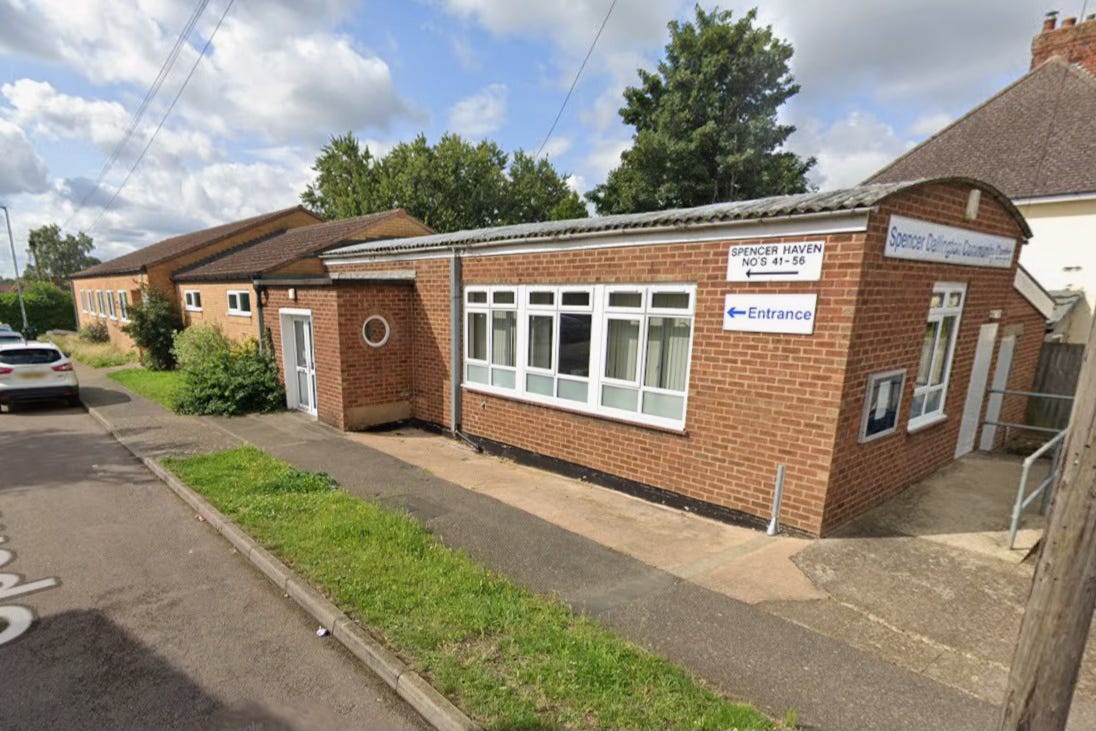
Longstanding charity Deafconnect has announced it will close at the end of this month.
The Northampton based charity had initially said it would continue providing its community services up to the end of June but has bought the date forward. It has said that local authority funding and grants have dwindled in recent years leaving it unable to operate.
North Northamptonshire Council is responsible for commissioning the county’s statutory sensory impairment services, which it funds jointly with West Northamptonshire Council (WNC). The authority is now working to make sure a new information and advice service for deaf people is available from April 2026.
It has warned that there may be a three-to-four week gap in provision while a replacement service is established.


Cllr Eddie McDonald, executive member for adult services at NNC, said:
“We recognise that this has been an unsettling and uncertain time for the Deaf community. Our aim is to establish a service model that more effectively reflects the needs of the community while reducing reliance on more formal care and support services.
“Given the level of interest from appropriate and capable organisations, and subject to following a robust governance and grants process, a new replacement service could realistically be mobilised by mid to late April 2026.”
The new service will receive grant funding from both North and West Northamptonshire councils of around £22,000 per year in total, however concerns have been raised that the grant would not adequately cover the needs of the Deaf community, especially to enable a new organisation to get going.
WNC councillor Sally Keeble (Labour, Dallington Spencer) said the council’s required level of support under the new service would also be substantially reduced from the current offer with Deafconnect.
The council’s new contract requires the service to provide an online or remote information and advice service, a social events offer for the Deaf and hard of hearing community, and just one face-to-face drop-in or booked appointment service in West and North Northants each month.
In contrast, the Deafconnect charity has provided a wide range of services, including sign language interpreters, BSL training, advice, and social support for adults and children, and is accessible from its base at the Spencer Dallington Community Centre in Northampton five days a week.
NNC has said that the new hearing impairment service is “intended to fund a targeted information, advice and community support offer, rather than a like‑for‑like replacement” of the Deafconnect model.
While the level of grant funding from the councils has not been reduced, the 150-year-old charity was previously able to leverage substantially more funding through external grant income and other donations to maintain its wide offering.
Cllr Keeble told the Local Democracy Reporting Service (LDRS):
“The needs of the community are much too substantial and to think you can meet them with £22,000 is complete nonsense. That doesn’t even employ a member of staff.
“If the council wants to replicate services in any way, they need to do some sort of scoping exercise so they can work out exactly what’s needed. They should be able to afford a bit more to enable a new service to get going.
“People are entitled to a level of support and a level of service and this seems like a really retrograde step. There needs to be some indication of a reasonable way forward, otherwise what’s been built up over many years will all be lost.”
A North Northamptonshire Council spokesperson said:
“We are pleased that we have received three Expressions of Interests from organisations [for the new hearing impairment service contract], which is an excellent response. All of these organisations have indicated that they are able to deliver the required service within the allocated funding.
“The funding for the new hearing impairment service has been deliberately set to reflect the scope of the service being commissioned. The grant is intended to fund a targeted information, advice and community support offer, rather than a like‑for‑like replacement of the previous charity’s wider operating model.
“The service specification has been designed around what the council is legally required to provide, alongside wider council information and advice provision and ongoing engagement with the Deaf community.
“It’s also important to be clear that council funding for support has not been reduced. The previous provider’s financial difficulties were driven by the loss of external grant income, not a withdrawal of council funding.
“The new grant level has been set to ensure a sustainable, proportionate service that can be delivered within available resources, while we continue to engage with the community and monitor demand as the new service is established.
“We will of course be working closely with a new supplier and if there is a case to review the level of funding based on demand etc then we would of course do that.”
Deafconnect has been contacted for comment on its new closure date.
By Nadia Lincoln
When this article was first published we incorrectly stated Cllr Johnson had only attended one council meeting since May instead of September. This article was amended on March 24th.
While we all wish Cllr Jeff Johnson better health, it's clear that he hasn't been well enough to function as a councillor since his election in May last year. The Local Government Act 1972 says "if a member of a local authority fails throughout a period of six consecutive months from the date of his last attendance to attend any meeting of the authority, he shall, unless the failure was due to some reason approved by the authority before the expiry of that period, cease to be a member of the authority".
Offering Cllr Johnson a blanket pass for the next four years so that he can keep his job and allowance may be technically legal, but it is a clear breach of the spirit of the law. The residents of Blackthorn and Rectory Farm deserve to be served by two councillors, not just one. It's also unfair to the other councillor, Keith Holland-Delamere, who has had to carry double the case load. This exceptional approval of absence is presumably being proposed to enable Reform to keep their overall majority of one vote following the loss of three Reform councillors in their first 10 months in office.
It's all very shoddy.
How can it be a "competitive process" when you have only one bidder. My experience as an Senior principal accountant for Northamptonshire County Council back in 1980s was when we had to tender contract the Audit commission insisted on three quotes. Why? Because it is the sensible thing to do. This latest bid sounds like a ten million football stadium that never happened. The company Directors who have been awarded this contract have no experience whatsoever with the type of work required. Reform UK once again demonstrate how inept they are.